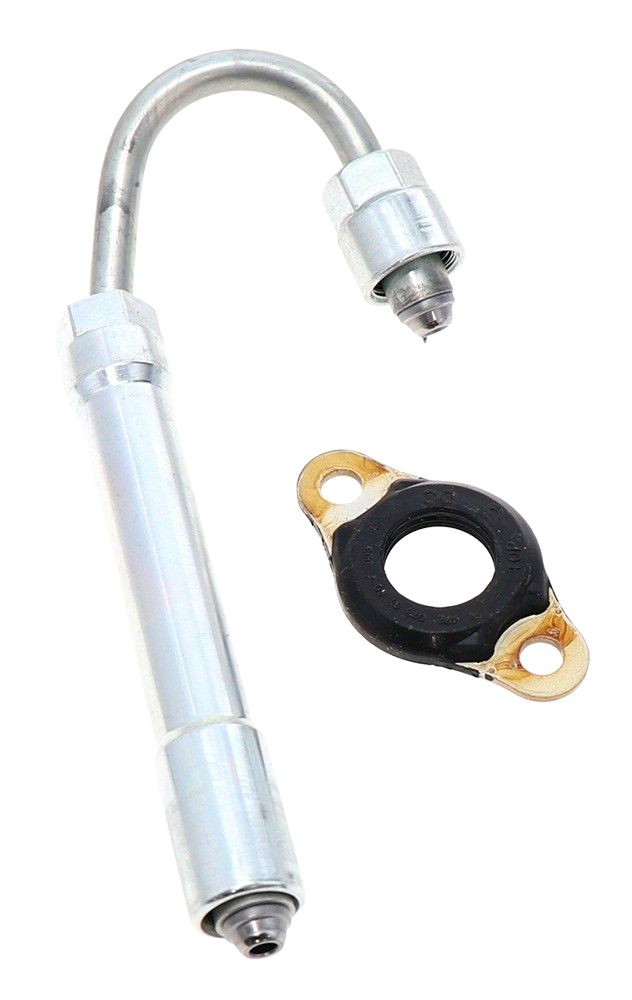

Detroit DD13, DD15 Fuel Injector Line 2010-2024
DETROIT DD13, DD15 FUEL INJECTOR LINE 2010-2024


ORDERS PLACED BEFORE 3PM EST WILL SHIP SAME DAY

WARRANTY
1M MILES OR 1 YEAR
PRODUCT DESCRIPTION
This is a New, Tamerx Fuel Injector Line, Tamerx part number A0029900400.This part is primarily made for a Detroit DD13, DD15, production years 2010-2024, and comes with a One Million Miles or One Year Warranty.
OEM NUMBERS
| Additional OEM | A0029900400 |
ADDITIONAL DETAILS
| CONDITION | New |
| UPC / Barcode | 00840490557390 |
| WEIGHT | 1.00 LBS |
SHIPPING OPTIONS
Ship Weight : 1.00 LBS
UPS Ground, 2nd Day Air, Next Day Air
SHIPPING POLICY
Tamerx Diesel Products ships via UPS Ground. Next day air shipping can be arranged for a reasonable price of anywhere from $50.00 - $100.00 depending on the weight of the product and your location. We will do everything we can to make sure that you get the service you need. We understand how important it is to receive your order as quickly as possible.
In most cases Tamerx Diesel Products only needs one address, as long as your product is shipping to the same location as your billing information. In order to eliminate credit card fraud, your billing information must match the credit card you provide.
The terms, conditions, and details of our warranty vary from product to product. Specific warranty details can be found below.
Tamerx provides a replacement warranty on all of our parts. The duration and mileage limitations of the warranty vary by product and are specified on the product's detail page/item listing.
Please note that the warranty covers replacement of the part and the cost of shipping the replacement part to you only. It does not cover any shop, labor, towing, or any similar or related costs. This is not a "money back guarantee".
If you experience a problem with your part or it is not functioning properly, the correct warranty procedure is to call us at (510) 257-1777 (8:00 AM - 5:00 PM ET Monday through Friday). Be sure to have your order number and/or other relevant order information ready so we can easily locate your order and resolve your issue as quickly as possible. From that point, we will review with you any troubleshooting steps that may need to be taken and other areas or systems that can be checked to rule out external problems contributing to your part's issue. If a replacement is determined to be necessary, we will then arrange for your replacement part to ship out ASAP and issue any necessary return shipping labels and/or documents.
As is the case for the majority of the diesel products sold on Tamerx, your part's warranty is active as soon as you install it. In some other cases, warranty activation is contingent upon you sending us your core (i.e., your old part). Tamerx will provide you a return shipping label for parts that have a warranty with a core return condition. When we have received your core return, the part's warranty coverage begins. We reserve the right to void the product warranty if your core is not received within the allotted time, or if it isn't received at all. If the warranty for the diesel part you are purchasing has a core return requirement, it will be clearly noted on the product detail page/item listing.
What is a Core Charge?
A core charge (also called "core deposit") is similar to the deposit you might pay for a can or bottle of soda and is a standard requirement in the auto parts industry. For example, in many states, to promote recycling, you pay a deposit when you purchase a can of soda and receive your deposit back when you return the empty can. Many automotive parts have a core charge, or core price, that works in essentially the same way as a soda can deposit.
30 Day Core Charge Hold
You authorize Tamerx Diesel Products, to hold your credit card for the specified core charge amount and that you agree to return your core with 30 days of receiving the purchased part. When we have received your core return, the hold is released and the core charge payment is canceled.
"This Product Doesn't Have a Core"
Supporting precise fuel delivery throughout the injection system, the Detroit DD13, DD15 Fuel Injector Line (2010–2024) provides a secure pathway for high-pressure fuel between key fuel system components. Designed for accurate compatibility with applicable Detroit DD13 and DD15 diesel engines within the specified model years, it helps maintain proper fuel flow under demanding operating conditions. This injector line is built to handle the high pressures required by modern diesel fuel injection systems while helping prevent leaks and disruptions in fuel delivery. Its durable construction is suited for exposure to engine heat, vibration, pressure fluctuations, and continuous heavy-duty use. Suitable for fleet maintenance and professional diesel repair, this fuel injector line helps maintain consistent fuel system operation and dependable long-term engine reliability.
FITMENT CHART
| YEAR | MAKE | ENGINE(S) | ||||
|---|---|---|---|---|---|---|
| 2010 | Detroit | DD13 | DD15 | |||
| 2011 | Detroit | DD13 | DD15 | |||
| 2012 | Detroit | DD13 | DD15 | |||
| 2013 | Detroit | DD13 | DD15 | |||
| 2014 | Detroit | DD13 | DD15 | |||
| 2015 | Detroit | DD13 | DD15 | |||
| 2016 | Detroit | DD13 | DD15 | |||
| 2017 | Detroit | DD13 | DD15 | |||
| 2018 | Detroit | DD13 | DD15 | |||
| 2019 | Detroit | DD13 | DD15 | |||
| 2020 | Detroit | DD13 | DD15 | |||
| 2021 | Detroit | DD13 | DD15 | |||
| 2022 | Detroit | DD13 | DD15 | |||
| 2023 | Detroit | DD13 | DD15 | |||
| 2024 | Detroit | DD13 | DD15 | |||
PEOPLE ALSO ASKS | BLOG(S)
A fuel injector line carries fuel from the fuel system to the injector under high pressure. Because it is exposed to pressure, vibration, heat, and repeated engine cycles, the line can eventually develop leaks, cracks, restrictions, or damaged connections.
Several conditions can cause a Fuel Injector Line to fail prematurely:
- Constant engine vibration
- Repeated vibration can weaken the line, fittings, or mounting points, eventually leading to cracks or leaks.
- Improper installation
- Incorrect routing, overtightened fittings, or a line installed under tension can place unnecessary stress on the tubing.
- Loose fittings or supports
- Missing clamps or loose mounting hardware can allow excessive movement and contribute to fatigue damage.
- Corrosion
- Moisture, road salt, chemicals, and harsh operating environments can corrode the exterior of the fuel line and weaken the metal.
- Contaminated fuel
- Dirt, rust, water, or other contaminants can contribute to internal restrictions and damage other components within the fuel system.
- Excessive fuel pressure
- Abnormal pressure caused by a fuel system malfunction can place additional stress on the injector line and its connections.
- Physical damage
- Contact with nearby engine components, incorrect servicing, or impact during repairs can bend, dent, or weaken the line.
- Heat exposure
- Continuous exposure to excessive engine temperatures can accelerate deterioration of fittings and surrounding components.
- Age and metal fatigue
- Repeated pressure cycles gradually stress the injector line. Over a long service period, this can contribute to cracking or leakage.
If a Fuel Injector Line develops a crack, significant corrosion, damaged fitting, or high-pressure fuel leak, replacement is typically the safest solution. Because high-pressure diesel fuel can penetrate skin and cause serious injury, never check a suspected leak with your hands. Correcting the underlying cause—such as excessive vibration, improper routing, or a fuel system problem—can help prevent the replacement line from failing prematurely.
The Detroit DD13, DD15 Fuel Injector Line carries high-pressure diesel fuel from the fuel rail to the injector for controlled fuel delivery into the cylinder.
Visible diesel fuel, fuel odor, wetness around the fittings, loss of fuel pressure, or engine-related fault codes can indicate a leaking injector line.
Yes, a damaged or leaking injector line can interfere with proper fuel pressure and contribute to hard starting on a DD13 or DD15 engine.
The fittings should be inspected for damaged threads, deformation, contamination, or sealing-surface wear that could allow high-pressure fuel leakage.
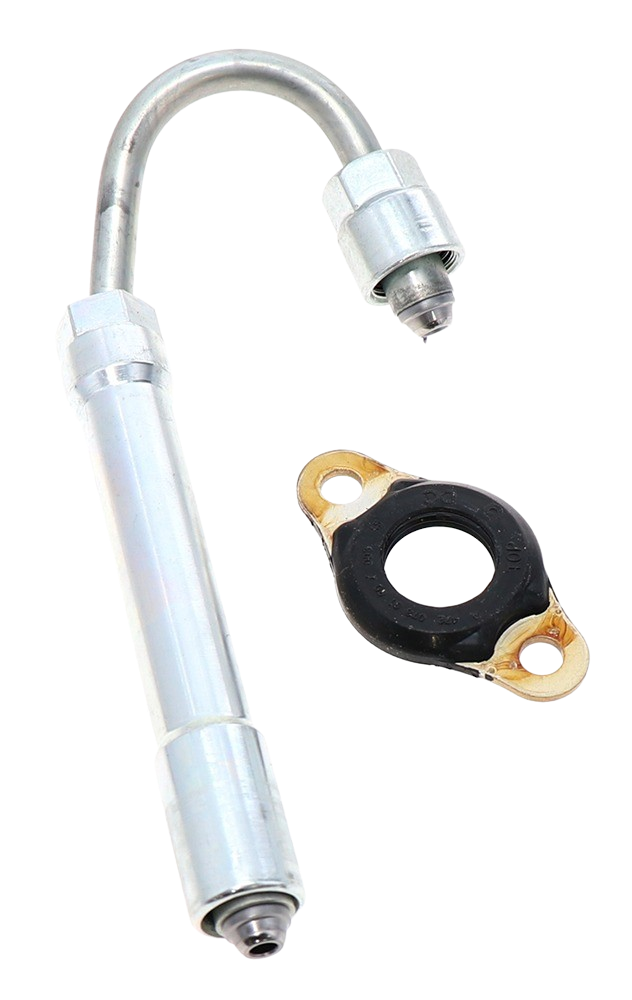


Detroit Fuel Injector Lines